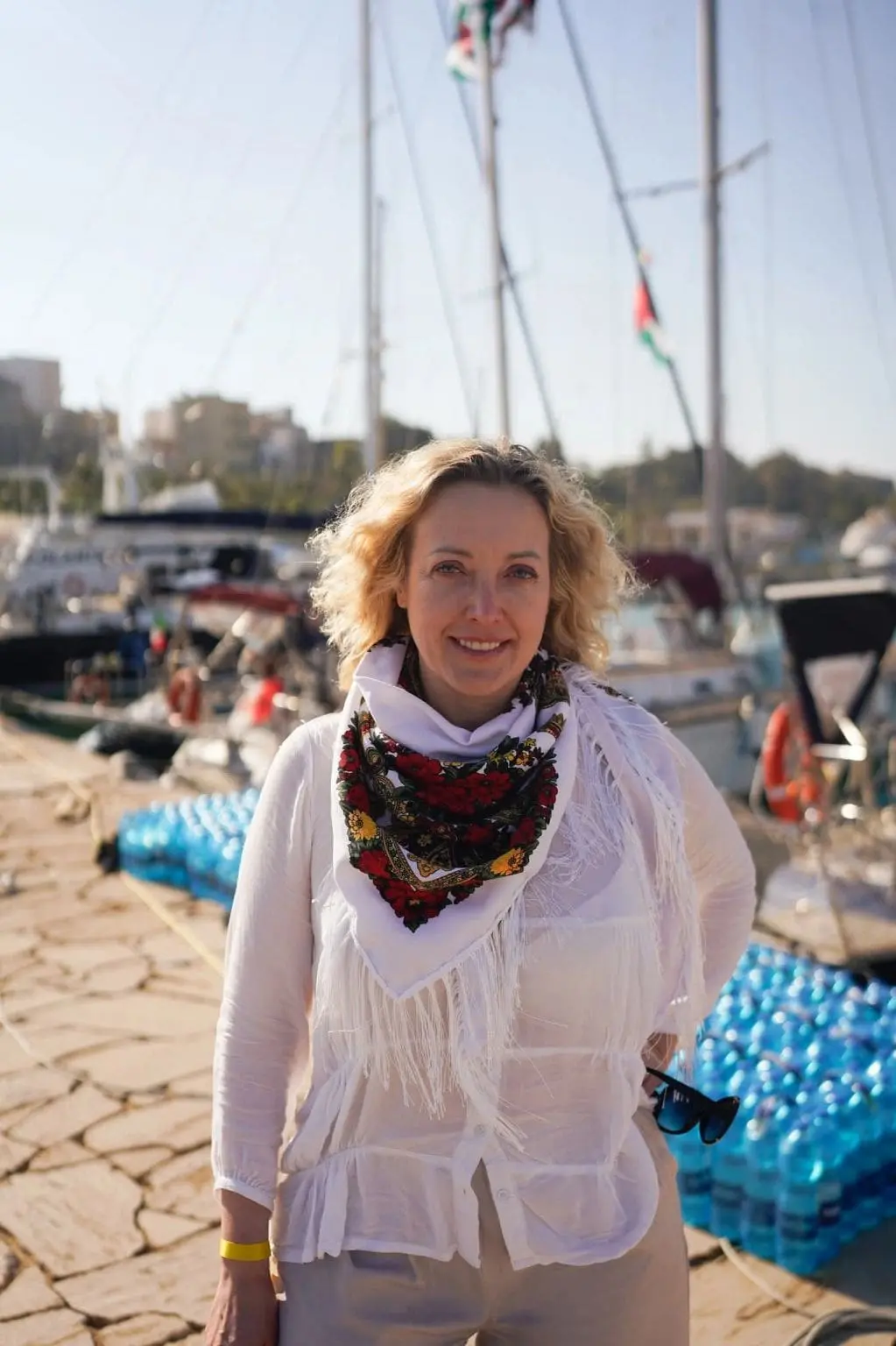
Ukrainian peacebuilder Nina Potarska sails to challenge illegal blockade of Gaza
Nina Potarska, a member of the ICAN-spearheaded Women’s Alliance for Security Leadership, is currently at sea with the Global Sumud Flotilla, a civilian-led mission organized with the Freedom Flotilla Coalition, en route to Gaza.
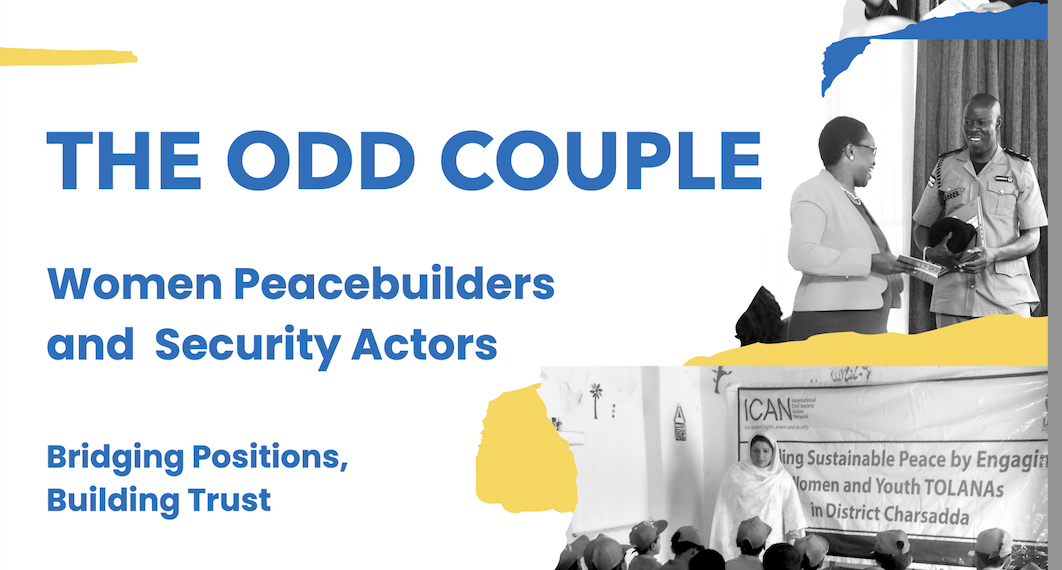
The Odd Couple: Women Peacebuilders and Security Actors Bridging Positions, Building Trust
The WPS agenda has proven a vital entry point for women peacebuilders to engage with the security sector and build trust within affected communities. These efforts—often invisible—are contributing to the reform of the sector, reshaping local security environments and mitigating violence.
The War Against Ourselves: Afghan Women Peacebuilders’ Response to the Mental Health Crisis in Afghanistan
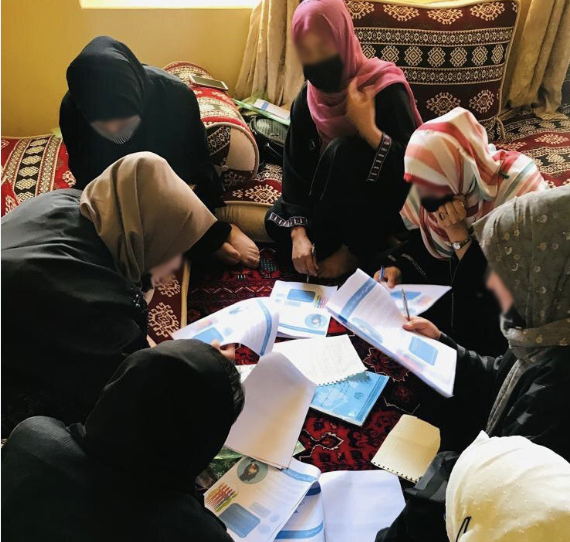
This case study describes the drivers of the mental health crisis in Afghanistan, its gendered and cultural dimensions, and the strategies used by Afghan women-led peacebuilding organizations to provide solutions. The authors conducted interviews with representatives of Afghan women-led peacebuilding organizations and thematic experts, which were complemented by a desk review of project documentation and […]
Home»ICAN Updates»
On International Women Day, Iraqi Women are in mourning
On International Women Day, Iraqi Women are in mourning
07 March 2014
The Council of Ministries to Parliament in Iraqi recently passed a draft law on Jaafari Personal Status that has been widely rejected by women’s organizations and other CSOs because it is sectarian and humiliates women’s and children’s rights. In response, the Iraqi Women Network have turned their celebration for International Women Day into a protest action under the slogan: “On International Women Day, Iraqi Women are in mourning”. Their full statement is below.
NO to the Sectarian Legislation humiliating women & denying their rights
In December 2013, and during the NGOs workshop which was devoted to discuss the draft of CEDAW shadow report, two issues were highlighted: “Ja’afari Personal Status Law” and “Ja’afari Jurisprudence”. All discussants agreed upon releasing a statement to condemn the proposed laws and to cancel it because of its disastrous consequences on women’s rights. This law deprives women of their dignity and rights in various issues such as: marriage, divorce, custody, and inheritance, which entirely contradicts the provisions of the Iraqi Constitution with reference to rights and freedoms. It also contradicts the Iraqi government’s commitment to the international conventions ratified by Iraq, especially the Convention on the Elimination of All Forms of Discrimination against Women (CEDAW, the International Covenant on Civil and Political Rights and the Convention on the Child’s Rights.
In addition, the Ja’afari Personal Status Law will put an end to the unity of the national legislation and will lead to fragmentation of the national identity, which both were reinforced and conceptualized by the Personal Status Law (188) for 1959 and its amendments that put into practice ever since. The Personal Status Law has had a constructive effect in reinforcing the judiciary power, justice and the institutions of law enforcement. It has also consolidate civic peace and the unity of the social fabric through mixed marriages among various sects, religions, and ethnicities. Most important, this law has protected a number of women’s rights based on the Islamic Sharia principles most relevant to the spirit of the times, and on top of that, its provisions are considerably derived from Ja’afari Jurisprudence (Fiqh).
In spite of the Iraqi government’s decision to adjourn the final decision of this draft until the end of 2014 parliamentary elections due to the pressure of many specialized professional and expertise in the judicial and law system, politicians, MPs, religious clerics, and social and cultural personalities, the civil society organizations (CSOs) continued their campaigns to advocate and pressurize the government to cancel this draft. CSOs also continued their activism to raise awareness around the massive damage and negative impact of this project on the Iraqi familial and societal relationships, especially, on women and children.
Today, the Iraqi Council of Ministers has broken its vow by announcing its approval to Ja’afari Personal Status Law and passing it to the parliament for legislation. This step raised questions and boos that come directly after the discussions of the Iraq Report for the CEDAW Committee in Geneva took place in February 18, 2014.
حيث حظيت المادة 41 من الدستور ومشروع قانون الأحوال الشخصية الجعفرية بتحفظات اللجنة لتكريسهما التمييز ضد النساء وتعارضهما مع مبدأ المساواة وعدم التمييز الوارد في المادة 14 من دستور العراق. كما يؤشر توقيت اعلانه المتزامن مع احتفالية يوم المرأة العالمي تكريس الظلم والتعسف تجاه النساء والأطفال الذين يشكلون بحدود ثلثي المجتمع، وغياب الإرادة السياسية في الاعتراف بحقوق المرأة ومشاركتها في صنع القرار.
CEDAW Committee made its reservation towards article 41 of the Constitution and Ja’afari Personal Status Law because they emphasize evident discrimination against women and contradict equality principles and indiscrimination values which are stated in article 14 of the Iraqi Constitution. The simultaneous timing of the Council of Ministers’ approval for this law with the International Women’s Day, draws the map for, and reinforces, injustice and discrimination against women and children, who make up almost 2/3 of the total Iraqi population. The timing also points out to the lacking political power as regards to women’s rights and women’s equal participation in the decision-making processes.
ان قرار مجلس الوزراء يتعارض تماماً مع اتفاقات جميع الكتل السياسية في مجلس النواب على ان المادة 41 من الدستور المتعلقة بقضايا الأحوال الشخصية التي استند اليها هذا المشروع هي لا تزال قيد التعديل الدستوري التي لم يتم حسمها حتى اليوم، وهي تتناقض تماماً مع المادة 14 من الدستور التي تنص على ان العراقيين متساوون امام القانون دون تمييز بسبب الجنس أو العرق أو القومية أو الأصل أو اللون أو الدين أو المذهب أو المعتقد أو الرأي أو الوضع الاقتصادي أو الاجتماعي.
The decision of the Council of Ministers contradicts with the agreement of all political blocs within the Iraqi Parliament that article 41 of the Constitution was considered amongst the controversy articles and it is still under revision for a constitutional , which need constitutional amendment. mysteriously, article (41) is utilized as a source for this project. This article has not been agreed upon by members of the parliament and it has not been amended yet; alteration.
Furthermore, article (41) is inconsistent with article 14 of the Constitution, which states:” Iraqis are equal before the law without discrimination based on gender, race, ethnicity, nationality, origin, color, religion, sect, belief or opinion, or economic or social status”.
Moreover, professing that the project does not cancel the Personal Status Law but it allows multiculturalism and freedom of choice for all citizens, is legally a deceptive allegation. In fact, it is meant to be a preliminary step to issue more laws for the Personal Status Law for each and every religion and sectarian division, as it happens in Lebanon; the country that has not witnessed any peace and stability since its independence; Lebanon, where multiple Personal Status Laws are core keystones that provoke absence of nationalism among the Lebanese and cause the bloodiest sectarian conflicts ever.
On basis of the supreme national interest, Iraqi civil society organizations reject, once again, sectarianism reflected in this project. Our objective is to maintain the unity of our people’s national and social structures, to build a civil society and a democratic state, to defend principles of citizenship and equality of rights for women and men, to eliminate all kinds of violence and discrimination against women, especially preventing early marriage of little girls, temporary marriages, polygamy, antagonistic divorce, and to impose marriage and divorce contract registration at courts.
At the same time, Iraqi civil society organizations emphasize, once again, their principles in respecting women’s dignity and their rights in choosing their partners independently with full consent of the intending spouses. Women shall have the right to build a familial relationship based on love, mutual understanding, and healthy partnership. These are the principles and values of the Iraqi civil society organizations, whose focus throughout their programs is to raise individual and societal awareness, develop social relationships, and to improve the legal systems and institutions on basis of equality and justice. Our aim is to ensure a healthy foundation for a democratic system and to achieve a sustainable socio-economic development in Iraq.
Finally, Iraqi civil society and women’s organizations call upon the Iraqi Parliament, all political powers and parties inside and outside the Iraqi Council of Ministers, The Higher Judicial Council, religious clerics, and the dignified law and justice expertise, to reject this hideous project, and to back up Iraqi women and their organizations in order to terminate this project.
On October 6, 2025, the U.N. Security Council holds its annual open debate on Resolution 1325 on Women, Peace, and Security. Today, we are not issuing a new statement. Instead, we are honoring our community of women peacebuilders—who appeared before the Security Council throughout these 25 years, speaking for the millions they represent—by echoing their messages.
ICAN FeaturedICAN LatestICAN UpdatesWASL UpdatesWomen's Alliance for Security Leadership
On behalf of the International Civil Society Action Network (ICAN) and members of the global Women’s Alliance for Security Leadership (WASL), we are honored to nominate Francesca Albanese, United Nations Special Rapporteur on the situation of human rights in the Palestinian territories occupied since 1967, for the 2026 Nobel Peace Prize.
در عرصه صحت روانی، افغانستان با بحران پیچیدهای مواجه است که این بحران به طور جدایی ناپذیر با ناامنی شدید فیزیکی، سیاسی و اقتصادی در کشور گره خورده و این نا امنی ها بحران را تشدید میکند. برای رسیدگی به آسیب های روانی، صحت و بهداشت جامعه به شیوه های پاسخگو به جنسیت و با مد نظر گرفتن حساسیت های فرهنگی، سازمانهای فعال در عرصه صلح سازی به رهبری زنان افغان در موقعیتی منحصربه فرد قرار دارند. این سازمان ها خدمات ابتدایی ارائه میدهند، مهارتها را توسعه میبخشند و در شکلدهی هنجارهای فرهنگی و جنسیتی نقش مؤثر ایفا میکنند.
ICAN FeaturedICAN LatestICAN UpdatesWASL UpdatesWomen's Alliance for Security LeadershipWPSO
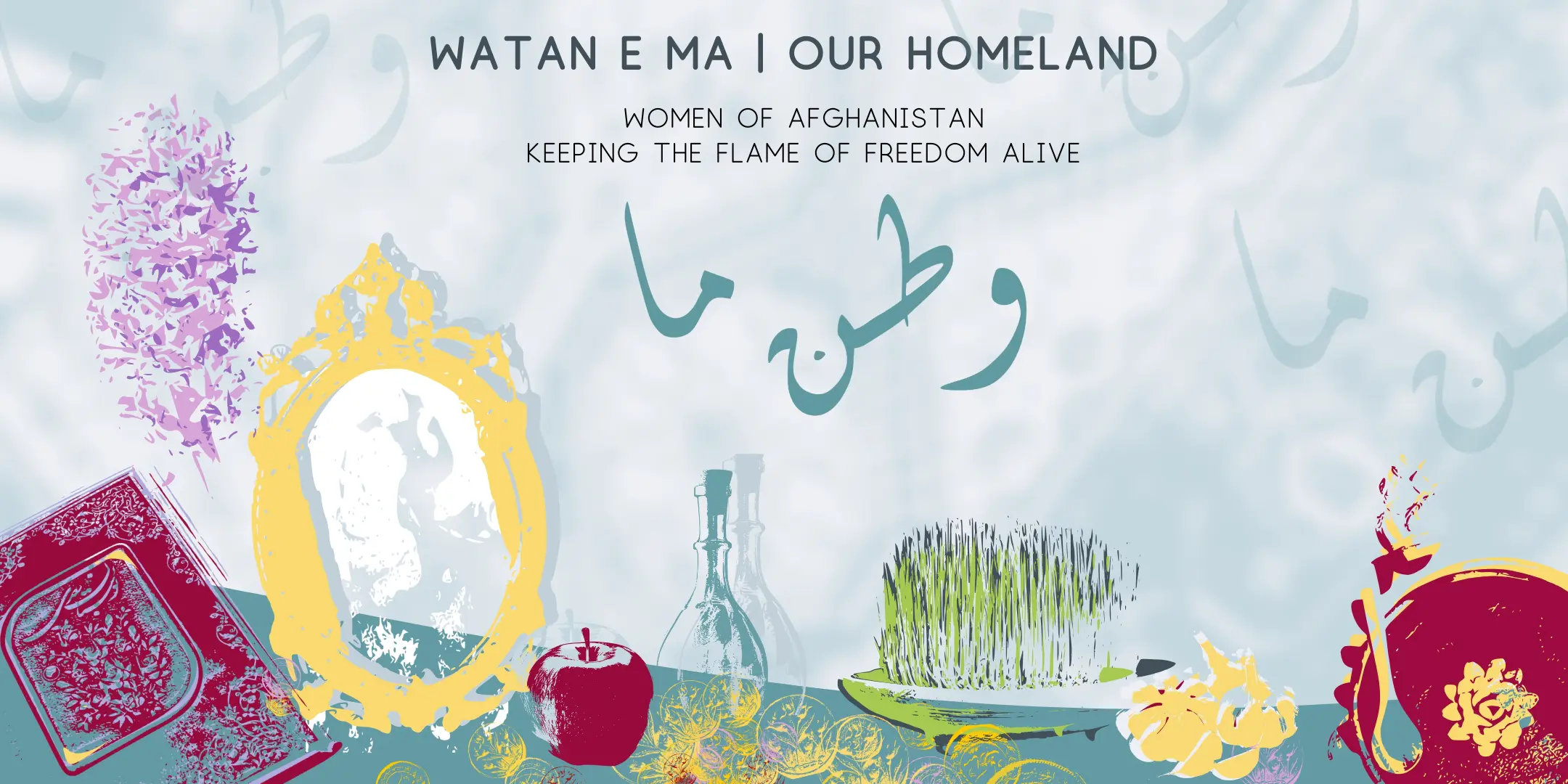
In a powerful departure from traditional advocacy, ICAN—guided by our Afghan partners and women peacebuilders—hosted the event “Watan e Ma – وطن ما – Our Homeland: Women of Afghanistan Keeping the Flame of Freedom Alive” on March 17, 2025 at Blue Gallery in New York City. Held during the 69th Commission on the Status of Women (CSW69), the event celebrated Afghan cultural heritage and the resilience of Afghan women peacebuilders, who persist in their leadership for peace, justice, and equality under the Taliban’s regime of gender apartheid.
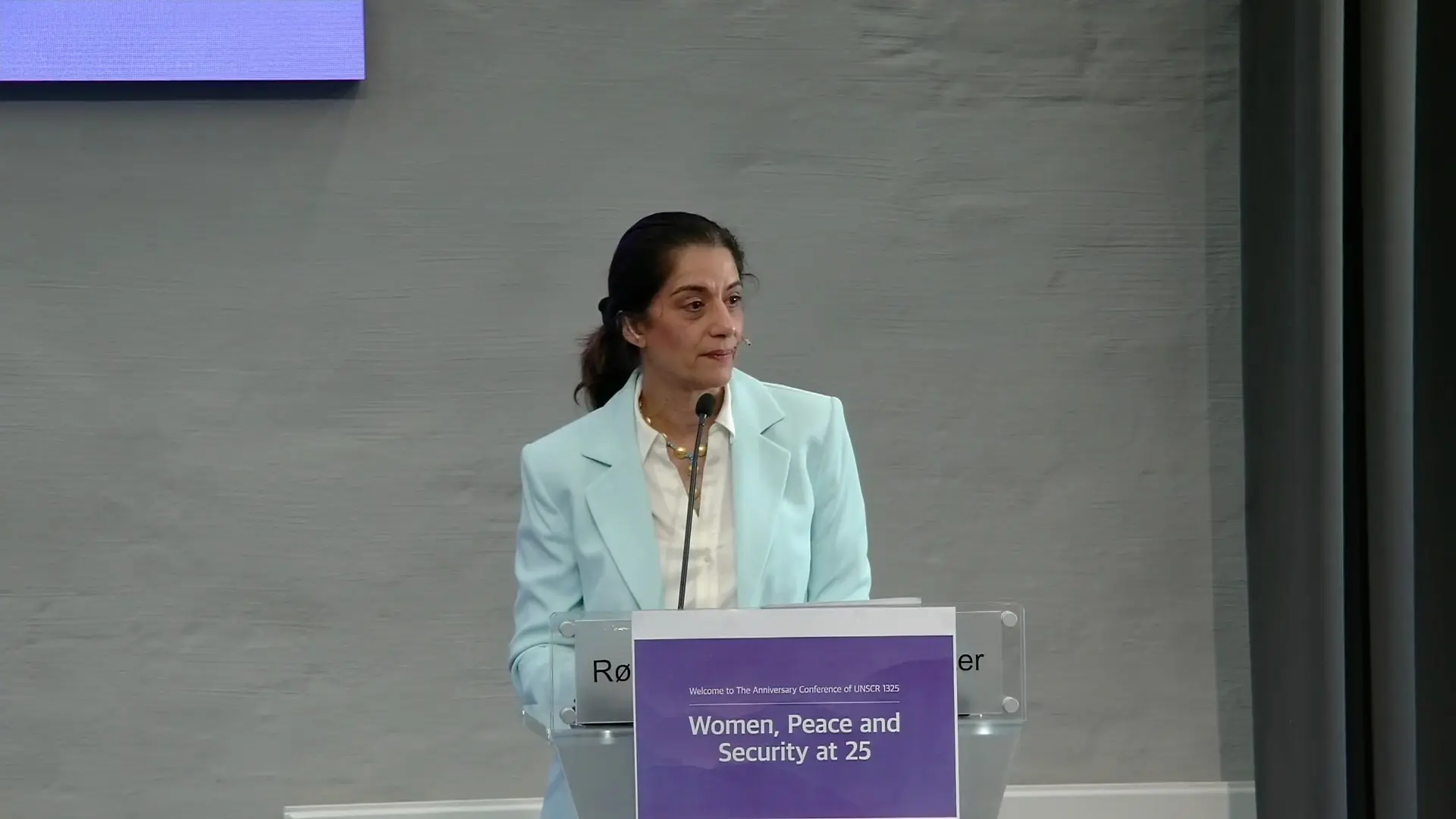
On May 5, 2025, ICAN's Sanam Naraghi Anderlini delivered the keynote speech at the two-day international conference "25th Anniversary Conference of UNSCR 1325 Women, Peace and Security."
As Senator Mobina Jaffer concludes 23 years of distinguished public service in the Canadian Senate, we extend our deepest thanks for her steadfast leadership as Chair of ICAN’s Board of Directors from 2014 to 2024.
Together with André Mundal, our new Interim Chair of the ICAN Board of Directors, we are delighted to welcome two new members to our Board of Directors.
Trust between communities and the security sector is critical for effective governance and peace. So is a vibrant civil society. When women peacebuilders are recognized and engaged as independent, strategic partners and security actors—in their own right—the results are transformative. Twenty-five years on from the launch of the WPS agenda, women peacebuilders’ creativity and contributions to societal peace and security are not only timely, they are even more essential.
Allamin FoundationAWAPSAAWAWBetter Peace InitiativeCIASECoACTGEN MyanmarGender and ExtremismsICAN FeaturedICAN LatestICAN UpdatesPAIMANPCIDWASL UpdatesWomen's Alliance for Security Leadership
Afghanistan is facing a complex mental health crisis inextricably linked with and compounding the dire state of physical, political, and economic insecurity in the country. Afghan women-led peacebuilding organizations are uniquely positioned to address community members’ health and wellness in gender-responsive, culturally- sensitive, and trauma-informed ways.
ICAN FeaturedICAN LatestICAN UpdatesWASL UpdatesWomen's Alliance for Security LeadershipWPSO